What Is Vertical Video Streaming?
· By VertyTV Editorial
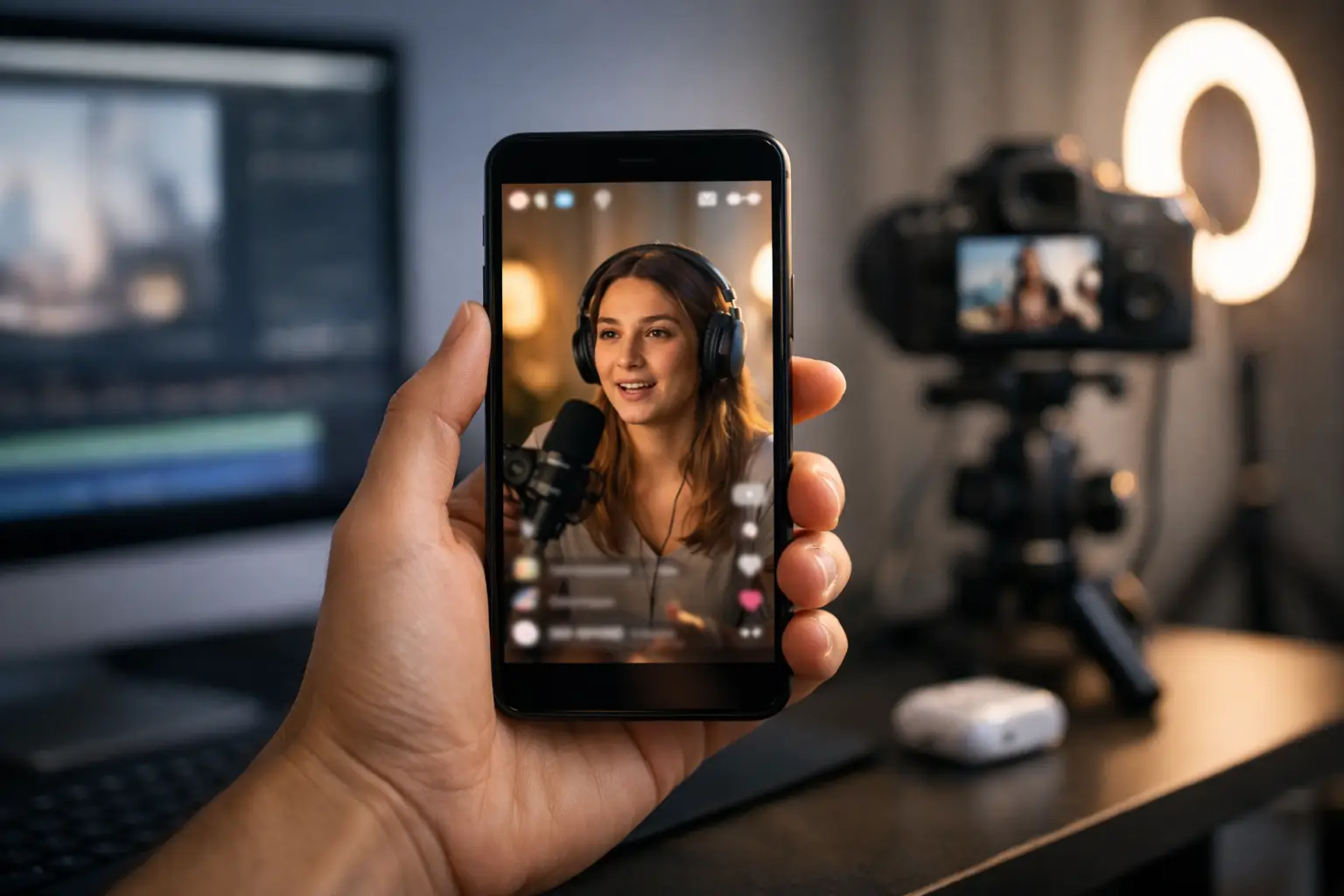
You already know the feeling. You pull out your phone for a quick watch, hit play, and the video shows up sideways with black bars, tiny action, and zero respect for how you’re actually holding the screen. That frustration is exactly why people ask, what is vertical video streaming? The short answer: it’s video made and delivered in a portrait format for phones, not retrofitted from TV habits.
Vertical video streaming is on-demand or live video designed to play upright, usually in a 9:16 aspect ratio. Instead of asking viewers to rotate their device, pinch the screen, or settle for a shrunken frame, it fills the phone naturally. It feels native because it is native. That matters more than a lot of traditional media companies wanted to admit.
What Is Vertical Video Streaming and Why Did It Take Off?
Vertical video streaming started as a behavior shift before it became a business model. People stopped treating the phone as a mini TV and started treating it as the main screen. Once that happened, the old assumption that "real video" had to be horizontal began to crack.
Social platforms accelerated the change. Users were already watching short clips upright, fast, and often. Streaming followed the audience. Not the other way around. If a huge share of viewing happens on a phone, then designing video for a phone is not a compromise. It’s just smart.
That’s the core of it. Vertical streaming is not horizontal content squeezed into a different shape. Done well, it changes framing, pacing, editing, and storytelling. Close-ups hit differently. Motion reads differently. Scenes need to work in a narrower field of view. Even comedy lands differently when the composition feels intimate and immediate.
How Vertical Video Streaming Works
On the delivery side, vertical video streaming works a lot like any other digital streaming format. Video files are hosted on servers, compressed for efficient playback, and delivered over the internet to phones, tablets, and sometimes desktop apps. The difference is in the format, the creative decisions, and the viewing context.
A vertical-first platform typically builds around short-form sessions and low-friction playback. That can mean fast load times, swipe-friendly navigation, shorter runtimes, autoplay previews, and content programming built for quick choices. The goal is obvious: less setup, more watching.
Ad-supported vertical streaming also fits this model well. Shorter episodes and mobile-native behavior make it easier to place ads in ways that feel closer to digital video than traditional TV. That doesn’t mean every ad break feels good. Bad ad pacing can still kill momentum. But when the platform gets the cadence right, free access becomes a strong trade.
Why It Feels Better on a Phone
This is where vertical streaming wins. Convenience is part of it, but not all of it.
Holding a phone upright is the default behavior for most people. Texting, scrolling, shopping, messaging, searching - it all happens in portrait mode. So when video fits that posture, the barrier drops. You don’t have to adjust anything. No turning the screen. No shifting grip. No visual dead space.
There’s also a psychological effect. Vertical framing can feel more personal because it mirrors how people see faces and bodies in close-range phone use. It brings subjects forward. It feels direct. For genres like drama, horror, beauty, confession-style storytelling, behind-the-scenes content, and fast comedy, that intimacy can be a feature, not a limitation.
Traditional widescreen still has strengths. Action with large environments, sports coverage, nature footage, and cinematic landscape shots often benefit from horizontal composition. That’s why the answer is not "vertical replaces everything." It doesn’t. It wins in the contexts where mobile-first viewing matters most.
Vertical Video Streaming vs Traditional Streaming
The biggest difference is not just screen orientation. It’s intent.
Traditional streaming grew up around long sessions, larger screens, and lean-back viewing. You pick a movie, commit an hour or two, and settle in. Vertical video streaming is built for lighter commitment. You watch in shorter bursts. You sample more often. You decide faster.
That changes content strategy. Episodes tend to be shorter. Hooks arrive earlier. Dead space gets cut. Exposition has less room to wander. If something doesn’t grab in seconds, viewers move on.
That pressure can produce sharper entertainment. It can also create thinner entertainment if creators chase speed over substance. So yes, vertical streaming is efficient. But efficient does not automatically mean good. The best vertical content understands pace without feeling disposable.
What Kind of Content Works Best?
Short-form scripted series work surprisingly well in vertical format when they’re built for it from the start. Thrillers can feel tighter. Comedy gets punchier. Genre content becomes more immediate because the frame keeps your attention centered.
Reality, lifestyle, creator-led shows, commentary, and snackable documentaries also fit naturally. These formats already rely on presence, personality, and direct visual engagement. Vertical enhances that.
Where things get tricky is with content originally designed for widescreen spectacle. Cropping a horizontal film into vertical often creates a worse version of both formats. You lose composition, spatial relationships, and visual intent. That’s why vertical-first production matters. Native beats adapted most of the time.
Why Platforms Are Betting on It
The answer is simple. Audience behavior is already there.
People want entertainment that loads fast, plays fast, and asks for less commitment upfront. They also want free options. A platform built around vertical streaming, short-form programming, and ad support can match that demand with fewer barriers. No subscription decision. No credit card wall. Just press play.
That model is especially strong for viewers who don’t want another monthly bill just to test a new service. It also helps newer platforms stand out. Competing with giant catalog streamers on volume is brutal. Competing on format, convenience, and exclusives is a smarter lane.
This is part of why vertical-first services have room to grow. They are not trying to be everything. They are trying to be right for a specific habit: mobile entertainment on demand, with less friction and faster payoff.
Is Vertical Video Streaming Just a Trend?
No. But some of the hype around it has been sloppy.
Vertical streaming is not a gimmick anymore. It reflects durable mobile behavior. Phones are not a side screen for a huge chunk of viewers. They are the primary screen, especially for shorter sessions across the day.
What is still evolving is the business and creative maturity around the format. Some companies treat vertical as a marketing cutdown. Others build full experiences around it. Those are very different bets. The second one has a better chance of lasting.
The same goes for content quality. If vertical streaming becomes a dumping ground for cheap filler, viewers will scroll past it. If it becomes a home for strong originals made for the format, it gets real staying power. That’s the line.
Who Vertical Video Streaming Is Really For
It’s for people who watch on their phone because that’s the easiest option and often the preferred one. It’s for viewers who like entertainment in short bursts but still want actual shows, not just random clips. It’s for anyone who values access over ceremony.
That does not mean every viewer wants every story in portrait mode. It means the format makes the most sense when the device, the runtime, and the viewing habit all line up. For Gen Z and younger millennial audiences especially, that alignment is already normal.
And when a platform pairs that format with exclusive programming and a free, ad-supported model, the pitch gets even tighter. That’s the lane services like VertyTV are pushing: mobile-native shows, zero paywall, instant access. Fast entertainment. No extra steps.
The Real Value of Vertical Streaming
The real value is not novelty. It’s fit.
A lot of media products fail because they ask people to change their behavior. Vertical video streaming works because it doesn’t. It meets viewers where they already are - on their phones, in portrait mode, looking for something quick, watchable, and worth the tap.
That won’t kill traditional streaming. Movie nights are safe. Prestige TV is safe. Big-screen sports are definitely safe. But for mobile-native entertainment, vertical video streaming answers a very modern question with a very clear response: why force the screen to act like a TV when the phone already won?
If you’re judging the format, don’t ask whether it looks like old-school television. Ask whether it fits how people actually watch now. That’s the standard that matters.