Why Vertical Sci Fi Series Actually Work
· By VertyTV Editorial
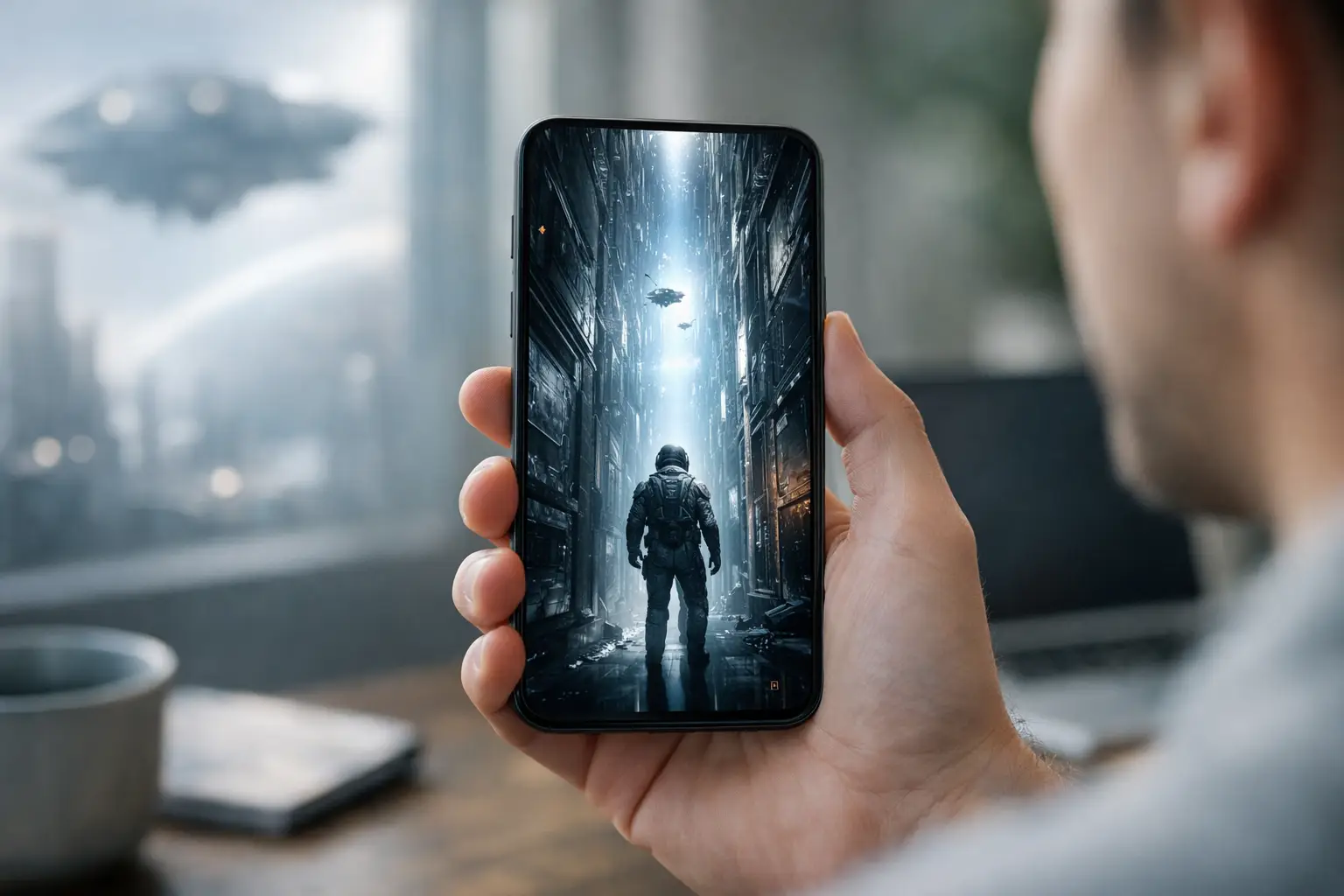
A spaceship launch used to mean a couch, a big screen, and 50 uninterrupted minutes. Not anymore. A vertical sci fi series can hit in the time it takes to finish a coffee run, and for phone-first viewers, that is not a compromise. It is the point.
Sci-fi has always been about new systems, new interfaces, new ways people live with technology. So it makes sense that the genre is finding real momentum in a mobile-native format. If your audience already watches on their phone, already thinks in scroll speed, and already wants stories that start fast, vertical is not a gimmick. It is good genre design.
What a vertical sci fi series gets right
A lot of genres can survive a format change. Sci-fi can use it.
That difference matters. Vertical framing creates intimacy by force. Faces fill the screen. Interfaces, alerts, helmet cams, surveillance feeds, and cockpit views feel native instead of adapted. The phone stops being a smaller TV and starts acting like part of the fiction. That is a major advantage for sci-fi, where so much of the tension comes from perspective, data, and proximity.
A chase scene in widescreen sells scale. A chase scene in vertical can sell urgency. You are locked into the character’s point of view. The ceiling feels lower. The corridor feels tighter. The threat feels closer. For stories about future tech, alien contact, outbreak scenarios, and military experiments gone bad, that compressed intensity works.
It also helps that sci-fi audiences are already trained to accept stylization. They do not need every world to be built with blockbuster budgets if the rules are sharp and the idea is strong. A good vertical sci fi series can lean into that. One striking concept. One clear visual language. One immediate problem. That is enough to hook somebody fast.
Vertical sci fi series are built for momentum
Traditional TV often asks for patience. Setup first. Payoff later. That structure still works, but it is not the only one that works.
Vertical series live on momentum. They open hot. They move early. They reward attention fast. For sci-fi, that can be a serious strength because the genre often loses casual viewers when it spends too long explaining itself. If the first episode is all lore and no propulsion, people bounce.
Short-form vertical changes the pressure. Every episode has to deliver a clean piece of story. A reveal. A twist. A mission update. A creature sighting. A system failure. The pacing gets sharper because it has to. That does not make the story shallower. It makes the storytelling more disciplined.
For mobile viewers, that discipline feels natural. You are not asking them to schedule their night around a plot. You are giving them a fast hit of narrative that still feels complete. Then you give them the next one.
That binge pattern is very different from old-school appointment viewing. It is lighter. Faster. Less commitment up front. But if the series is good, the total watch time stacks quickly.
The format changes the kind of sci-fi that hits hardest
Not every sci-fi concept benefits equally from going vertical. Massive ensemble politics with five kingdoms in orbit and 20 named factions can get crowded fast. Stories built around emotion, pressure, and immediacy tend to land harder.
That is why certain setups feel especially strong in vertical. A lone pilot trapped in a damaged craft. A soldier receiving strange transmissions. A lab worker documenting an experiment in real time. A city under attack, seen through one survivor’s phone. These concepts match the frame. They feel native to the device in your hand.
Even when the world is big, the access point should be tight. The best vertical sci fi series do not try to show everything at once. They choose one lane and hammer it. That could mean horror-leaning sci-fi, action-heavy dystopia, cyberpunk mystery, or pulp future war. The common trait is focus.
This is where trade-offs show up. Vertical is not ideal for every kind of spectacle. Huge landscape reveals and wide fleet battles lose some impact when the frame narrows. If the whole appeal of your series is panoramic worldbuilding, horizontal still has the edge.
But if the appeal is tension, immediacy, and visual punch on a phone, vertical is not second-best. It is the better tool.
Mobile-native viewing changes audience expectations
People do not watch on phones the same way they watch on TVs. They expect speed. They expect clarity. They expect a reason to keep going within seconds.
That expectation can sound brutal, but it creates opportunity. A vertical sci fi series does not have to fight for a living room slot or ask viewers to justify another monthly subscription. It can simply be there, ready, on demand, with no friction. That matters more than media people sometimes admit.
Convenience shapes taste. If a show is easy to start, easy to follow, and easy to continue, more people will give it a chance. Free helps. Short helps. Strong hooks help most.
This is also why ad-supported models make sense in the space. For younger viewers, a few ads are often a fair trade for instant access. No paywall. No card. No long decision cycle. Just press play.
That model fits short-form sci-fi especially well because the genre thrives on repeat engagement. Cliffhanger endings, worldbuilding reveals, recurring threats, and serial mysteries all push the next episode naturally. One good session can turn into ten fast.
AI originals and sci-fi are a natural match
Sci-fi has always played with the edge between human and machine, real and synthetic, signal and noise. That makes it a smart home for AI-generated originals, especially in a vertical environment where experimentation is part of the appeal.
The key word is not novelty. It is fit.
AI-assisted or AI-generated sci-fi can move with more speed, test bolder visual ideas, and create worlds that feel strange enough to stop the scroll. For audiences raised on rapid visual culture, that edge matters. The image has to punch. The premise has to land instantly.
Of course, this comes with caveats. If the story is weak, no production trick saves it. If the visuals feel random or inconsistent, viewers will notice fast. Sci-fi fans are generous about style, but they still want internal logic. The future can be weird. It still has to make sense on its own terms.
When it works, though, it really works. You get a format built for phones, a genre built for experimentation, and a production approach that can generate distinctive worlds fast. That combination is hard to ignore.
Why this format suits exclusive streaming platforms
A broad streaming catalog can afford to be vague. Exclusive platforms cannot. They need a point of view.
Vertical sci fi series help create one fast. They signal format, tone, and audience in a single move. They tell viewers this is not recycled TV squeezed into a phone. This is content designed for the screen you already use most.
That is where a platform like VertyTV fits naturally. Exclusive AI originals, vertical-first storytelling, and free access are not random features stacked together. They reinforce the same pitch. Fast entertainment. Mobile-native. No friction.
For the audience, the value is simple. You do not have to commit to a whole new viewing lifestyle. You just open the app and watch something built for the moment you are in.
That matters because short-form does not mean low stakes. It means low resistance. Big difference.
The future of vertical sci fi series
The most interesting thing about vertical sci fi series is not that they exist. It is that they reflect where audience behavior is already headed.
Phones are not the backup screen anymore. For millions of viewers, they are the main screen. That shifts how stories get framed, paced, and delivered. It also shifts which genres can lead the change. Sci-fi is near the front because it adapts well to new interfaces, new rhythms, and new production models.
There will still be prestige epics and giant-screen spectacle. That is not going away. But there is now real room for something sharper and more immediate - sci-fi built for the grip of a hand, the pace of a scroll, and the kind of attention that comes in bursts but returns often.
That is not a downgrade. It is a different kind of entertainment grammar.
And if creators take the format seriously, not as a compromise but as a design choice, the next great sci-fi habit may not start on your TV at all. It may start the second you unlock your phone.