The Camera Is a Dead Man Walking
· By Roc Hatfield
From writer and Atlantium Studios Founder Roc Hatfield
AI video generation is already years ahead of where most creators think it is. The backlash isn't really about technology — it's about a priesthood losing its temple.
There's a moment in every technological revolution when the incumbents stop laughing and start snarling. For AI-generated video, that moment is now.
Spend an afternoon in the comment sections of any AI-native studio and you'll find two populations. The first — the majority — is curious, entertained, occasionally awestruck. The second is something else entirely. Not skeptical. Not critical. Furious. To this crowd, a film generated by a model rather than captured by a lens isn't just bad art. It's an abomination. A desecration. As if the camera itself were a sacred object, and pointing anything else at a story were a kind of blasphemy.
Here's the uncomfortable truth the second group hasn't metabolized yet: the technology they're raging against isn't coming. It's here. And it's already so far ahead of where the average creator — and the average critic — believes it to be that the argument is effectively over. They're litigating a border that the frontier crossed eighteen months ago.
The Gap Nobody Wants to Talk About
The public conversation about AI video is stuck somewhere around "look, the fingers are weird." Meanwhile, AI-native studios are shipping serialized episodic content at industrial scale — thousands of episodes, coherent characters, persistent worlds, full sound design — on timelines and budgets that would make a traditional production accountant weep into their call sheets.
This is the gap: what the technology does versus what the culture thinks it does. It's the same gap that existed in 1995, when serious people explained that the internet was a fad for hobbyists, and in 2007, when serious people explained that nobody would watch video on a phone. The gap always closes in the same direction, and it never closes gently.
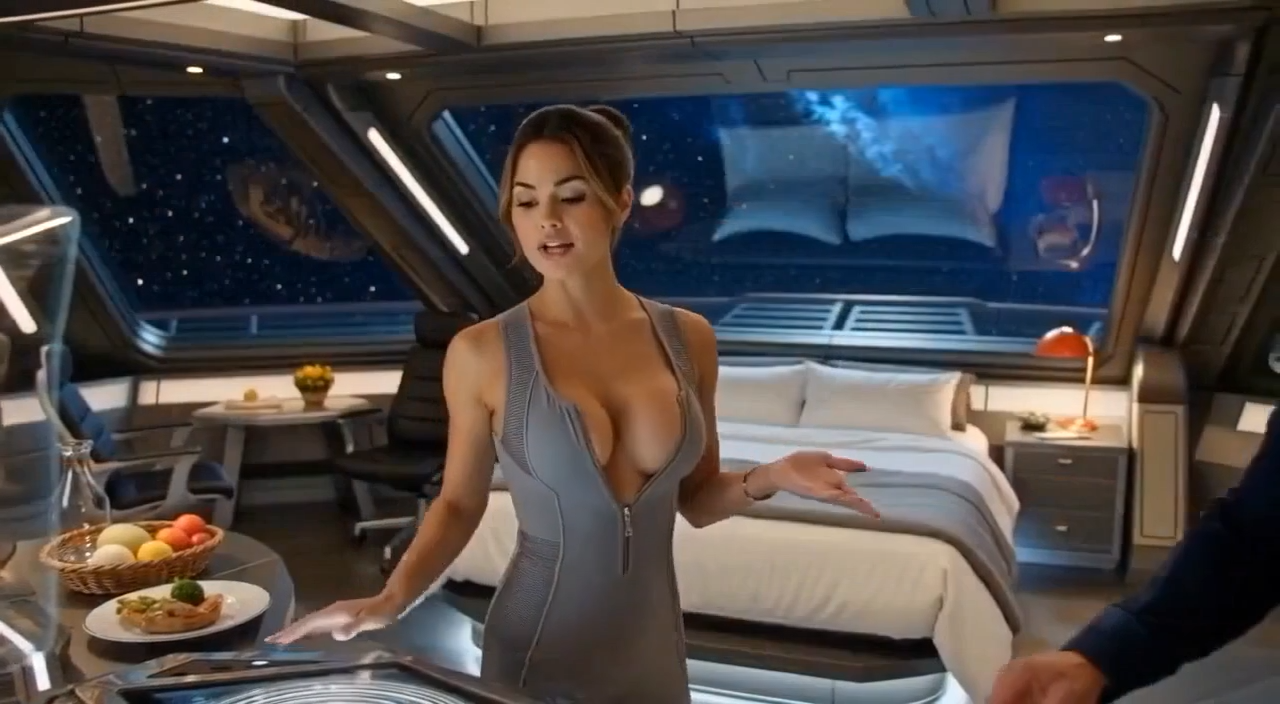
Vertical drama — episodic fiction built for the phone screen, the most-watched display in human history — is where this is playing out fastest. The format is new enough that there's no legacy establishment to defend it, which means AI-native studios aren't disrupting an incumbent workflow. They're building the workflow. There is no "traditional way" to make a thousand-episode vertical sci-fi serial, because no traditional pipeline could survive the attempt.
Why the Anger?
The hostility deserves to be taken seriously, because it's not really about output quality. Quality complaints fade as quality improves, and quality is improving on a curve that embarrasses every previous media technology. The anger is about something deeper: the camera was never just a tool. For 130 years it was the gatekeeper. Access to cameras, crews, soundstages, and distribution was the moat around an entire professional class. The lens was the membership card.
Generative video dissolves the moat. When the constraint on filmed storytelling stops being capital and equipment and becomes imagination and taste, the people who invested their lives in mastering the old constraint experience that as theft. It isn't theft. It's the same thing that happened to scribes when movable type arrived, to portrait painters when the daguerreotype arrived, to darkroom technicians when the sensor arrived. The pattern is old. Only the grief is new each time.
And there's a second, stranger current underneath the anger — one worth naming carefully. The major AI labs are now taking seriously questions that would have been science fiction a decade ago. Anthropic has hired researchers to study model welfare and treats the question of whether advanced models could have morally relevant experiences as open rather than absurd. Nobody credible claims today's systems are conscious — that remains an unresolved and hotly debated scientific question. But the fact that it's a question at all, being investigated with straight faces inside the world's leading labs, changes the emotional temperature of everything these systems make. Some of the rage at AI video may be a proxy for a bigger vertigo: the suspicion that the thing generating the story might one day be, in some sense, a storyteller.
The Camera's Retirement Plan
None of this means the camera disappears. It means the camera gets demoted — from the only way to make moving pictures to one way, and eventually to a specialized one. The trajectory is legible: lenses will keep the jobs where indexicality matters — documenting events, journalism, evidence, memory, the selfie. The camera becomes what the typewriter became, what film stock became: a deliberate aesthetic choice, a boutique commitment, occasionally a fetish. "Filmed entertainment," as a category, starts to sound the way "horseless carriage" sounds now — a term that only made sense during the transition.
Five to ten years out, the more interesting question isn't how content gets made. It's how it gets delivered. The screen itself — the rectangle we've been staring at since the nickelodeon — is the next incumbent. Neural interface research, spatial audio, haptics, and sensory stimulation are converging on a proposition that would have sounded deranged in 2020: entertainment that bypasses the display entirely and arrives as experience. Not watching a world. Being bathed in one — visuals, ultra-dimensional sound, synthetic sensation — rendered on demand by systems that generate the story as fast as you can live it. That future is speculative in its timeline but not in its direction; every relevant technology curve points the same way.
Shadows on the Cave Wall
Here's the frame that makes the panic dissolve. Humans have been doing exactly one thing since the beginning: gathering around a light source to share invented worlds. Firelight on a cave wall. Ink on vellum. Silver halide on celluloid. Pixels on glass. Every generation's storytelling technology looked like sorcery to the one before it and like a quaint antique to the one after.
Generative AI is not a break in that lineage. It's the next entry in it — a few steps past the shadows our ancestors threw on stone. The people howling that AI video isn't "real" filmmaking are correct in the narrowest possible sense and wrong in every sense that matters. It isn't filmmaking. It's what comes after filmmaking, the way filmmaking was what came after theater, which was what came after the fire.
The camera served us magnificently for a century and a quarter. It deserves a dignified retirement, a wing in the museum, and our genuine gratitude.
But the light source is moving again. It always does. The only question — the only one that has ever mattered — is who's telling the story when it gets there.