On Demand Video Is Built for Phones Now
· By VertyTV Editorial
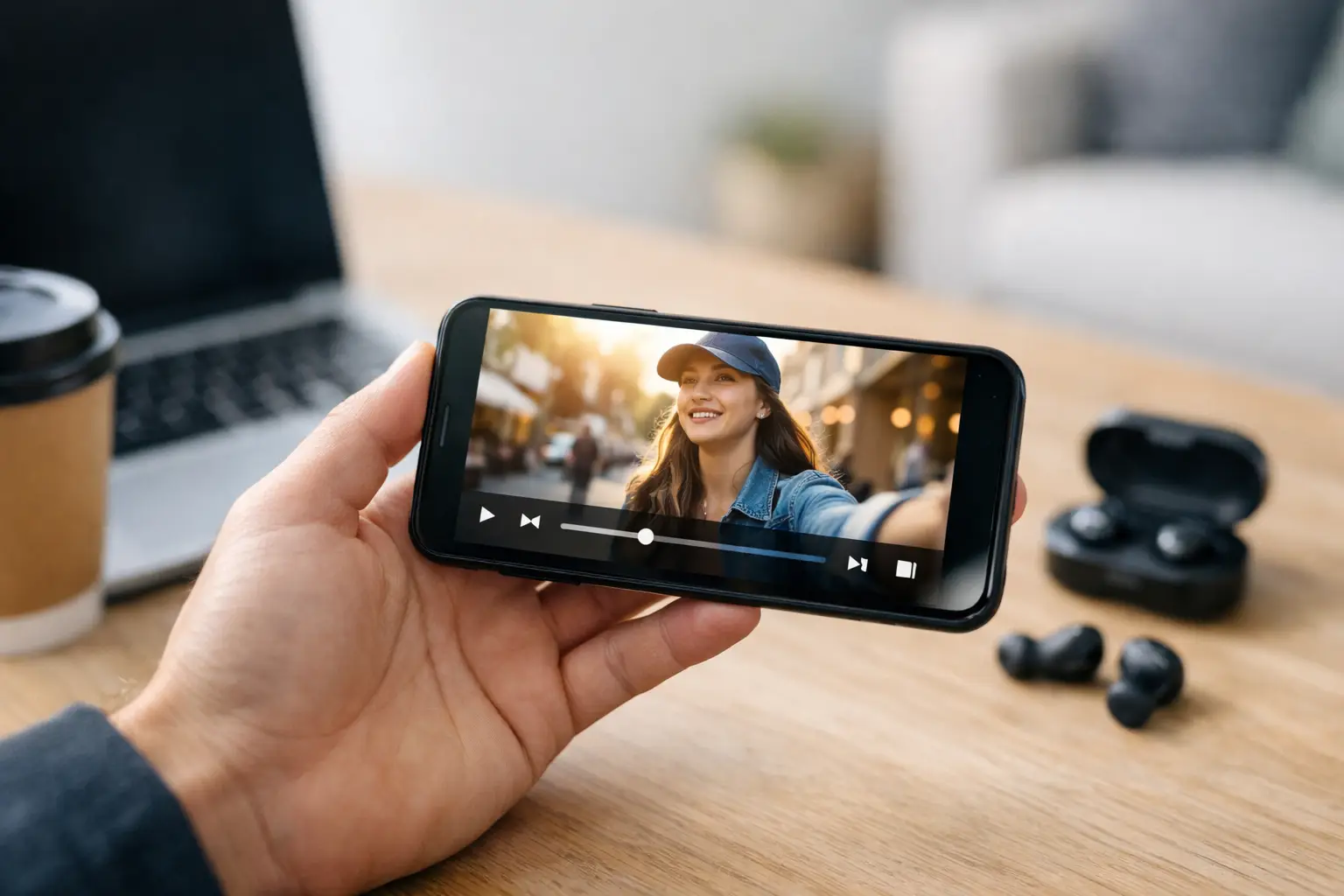
Open a streaming app on your phone and the old rules fall apart fast. Most people are not settling in for a two-hour movie every time they want to watch something. They are filling gaps - on the train, in line, between classes, during lunch, late at night when attention is low and patience is lower. That is where on demand video stopped being a living-room product and became a mobile habit.
This shift matters because the format now matters almost as much as the content. Convenience used to mean watching what you want, when you want. That is still true, but now it also means how fast it starts, whether it fits your screen, and whether you have to jump through payment prompts just to see if it is worth your time. The platforms winning attention are the ones built for instant watch behavior, not just giant libraries.
What on demand video means now
For years, on demand video was defined by control. You did not have to wait for a scheduled broadcast. You chose the title, hit play, and watched on your own time. Simple. But the market got crowded, and that basic promise is no longer enough on its own.
Now the better question is this: what kind of on demand video actually fits the way people watch? If your audience lives on mobile, short sessions are not a compromise. They are the main event. A ten-minute episode can beat a prestige drama if it matches the moment better. Fast access wins. Low commitment wins. Good ideas delivered quickly win.
That does not mean long-form is dead. It means context is running the show. A couch-and-TV experience still works for some content. But for a huge slice of everyday viewing, especially among younger audiences, the phone is not the second screen. It is the first one.
Why mobile changed the rules for on demand video
Streaming used to chase bigger catalogs, bigger productions, and longer watch times. Mobile-native audiences changed the scoreboard. They are not always looking for an endless scroll of mediocre options. They want a quick hit of something worth watching right now.
That changes product design. A mobile-first on demand video service has to remove drag at every step. Start times need to be fast. The interface has to make sense with one thumb. Episodes need to feel complete without asking for a huge time investment. And if the service is free, that is not a side benefit. For a lot of viewers, it is the deciding factor.
The trade-off is obvious. Short-form content has less room to build slowly. Vertical framing changes how scenes are staged and how action plays on screen. Ads can interrupt flow if they are handled badly. But when the experience is built around the phone instead of awkwardly squeezed into it, those trade-offs can become strengths.
Vertical video is the clearest example. For years it was treated like an accidental format. Now it is a native one. People hold their phones upright. They are not wrong for that. A service that respects that habit is not cutting corners. It is designing for reality.
Free matters more than the industry likes to admit
Subscription fatigue is real, and viewers feel it every month. One platform for prestige shows. Another for live sports. Another for reality. Another for anime. Another because one series you liked moved there. Pretty soon, "watch whatever you want" starts to feel like a budgeting exercise.
That is why ad-supported on demand video keeps gaining ground. People will watch ads if the deal is clear. Free access. No credit card. No fake free trial. No friction. For casual viewing, that model makes a lot of sense because the commitment matches the behavior. You want entertainment, not paperwork.
There is still a balance to get right. Too many ads and viewers bounce. Too few and the business model strains. But the bigger point is that free is not a downgrade anymore. For younger audiences especially, it is often the smarter value proposition. If the content is strong and access is instant, paywalls start to look like an unnecessary obstacle.
The catalog arms race is losing its grip
For a long time, platforms competed by stockpiling titles. More movies. More seasons. More genres. More everything. That strategy still has a place, but it also created a familiar problem: too much choice, not enough excitement.
A focused library can feel stronger than an oversized one if the programming has a point of view. Exclusive originals matter here, especially when they are designed for the platform instead of inherited from older media logic. Viewers do not always need a thousand options. They need a reason to care.
This is where distinctive programming starts to beat generic abundance. Weird wins. Bold concepts win. Genre experiments win. If the show feels native to the platform and the platform feels native to the phone, the whole experience clicks faster.
That is one reason vertical-first services are getting attention. They are not trying to be everything for everyone. They are making a sharper bet: give mobile viewers original entertainment built for the way they already watch. VertyTV sits in that lane with free access, exclusive AI originals, and short-form shows made for vertical viewing. It is a tighter proposition than the old catalog sprawl model, and for the right audience, tighter is better.
AI originals are not a gimmick if the idea lands
AI in entertainment gets two reactions fast: hype and eye-rolls. Fair. A lot of what gets marketed as innovation is just noise with a press release. But audiences do not really care how impressed the industry is with the toolset. They care whether the result is entertaining.
That is the real test for AI-generated originals in on demand video. Do they feel fresh? Do they move? Do they give people something they have not seen before? If yes, viewers will watch. If not, no amount of tech branding will save it.
The upside of AI-assisted production is speed, experimentation, and a wider creative range for short-form concepts that might never survive a traditional development pipeline. The risk is sameness or novelty with no staying power. So the bar is simple: concept first, execution second, technology third. In that order.
For mobile audiences, especially those used to rapid content discovery, the appetite for new formats is high. They are open to strangeness. They are open to style. They are open to shows that move differently. That makes short-form AI originals a natural fit - if they are actually fun to watch.
What viewers expect from on demand video now
The baseline has changed. People expect speed. They expect free or at least flexible pricing. They expect content that works on a phone without feeling cropped, crammed, or compromised. They also expect the first few seconds to prove the watch is worth it.
That expectation raises the standard for every platform. You cannot coast on legacy habits anymore. If sign-up takes too long, users leave. If the interface is cluttered, users leave. If the content feels like recycled leftovers from another medium, users leave.
The better services understand that modern on demand video is not just a distribution model. It is a product experience. Content, format, access, and pacing all have to line up. Miss one, and the whole thing feels off.
There is also a quieter shift happening. Viewers are getting more comfortable with mixed-intensity entertainment. Not every watch session needs to feel major. Sometimes people want a quick thriller hit, a bizarre sci-fi concept, or a sharp burst of genre chaos they can finish before their coffee order is ready. That kind of session used to be undervalued. Now it is a core use case.
Where this goes next
On demand video is moving closer to real behavior and farther from old prestige assumptions. That means more mobile-native design, more ad-supported access, more short-form experimentation, and more programming made to earn attention fast instead of begging for it over ten episodes.
Some platforms will keep chasing scale. Others will chase fit. Fit looks smarter right now. Not because every viewer wants the same thing, but because the strongest products know exactly who they are for and how they are meant to be watched.
That is the lane to watch. Not bloated streaming. Not forced friction. Not endless menus pretending to be value. Just instant entertainment, made for the screen in your hand, ready when you are. If on demand video is going to keep growing, it has to keep getting simpler, sharper, and more watchable by the minute.