Free Vertical Video Is Finally Worth Watching
· By VertyTV Editorial
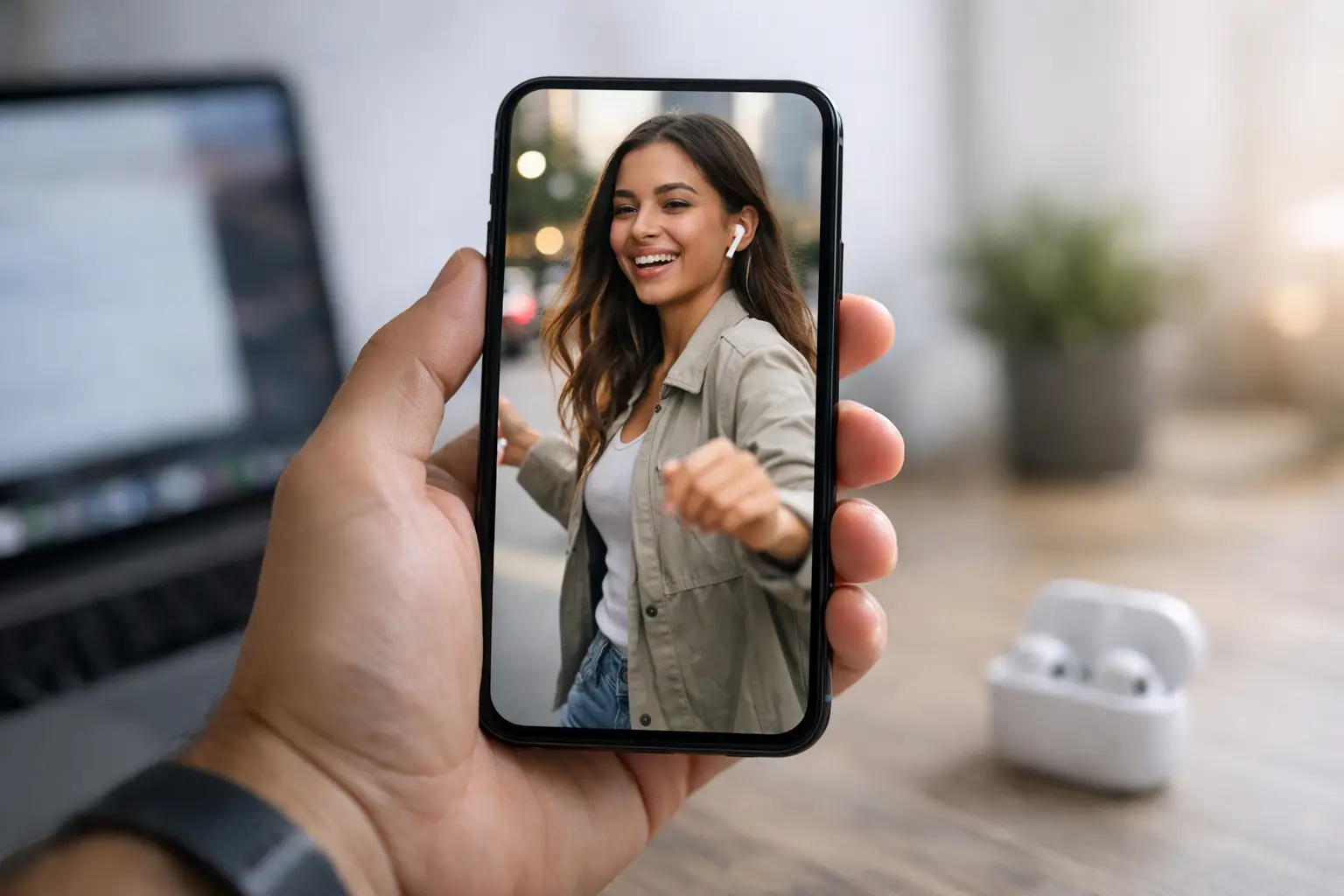
A lot of free vertical video still feels like filler. Quick clip. Cheap hook. Hard cut. Repeat. That is exactly why the format gets underestimated.
But the gap between social scraps and real entertainment is getting smaller fast. Vertical video is no longer just something you scroll past while waiting in line. When it is built for the phone from frame one, it can deliver pace, immersion, and instant payoff in a way traditional widescreen often cannot. Different format. Different rules. Better fit for how a lot of people actually watch.
Why free vertical video makes sense now
The old complaint was simple: vertical looked like an accident. A compromise. Something you got because nobody turned their phone sideways. That era is over.
Now the phone is the first screen for a huge chunk of viewers, especially younger audiences who treat entertainment like an on-demand habit, not a scheduled event. They watch in short bursts. Between classes. On the train. On the couch with one eye on a group chat. Free vertical video fits that behavior because it removes the two biggest points of friction at the same time - format friction and payment friction.
No rotating the screen. No subscription decision. No credit card wall. Just press play.
That matters more than a lot of media companies want to admit. People do not always reject content because they dislike it. Sometimes they reject effort. One extra step is enough to lose the moment. Free, mobile-native video wins by asking less.
Vertical is not just cropped video
This is where the format either works or falls apart.
Bad vertical video feels like horizontal content forced into the wrong shape. Heads get chopped. Action gets cramped. Scenes lose scale. It looks like a compromise because it is one.
Good vertical video is staged differently. Framed differently. Edited differently. The best creators treat the phone screen as its own canvas. Close-ups hit harder. Reaction shots feel more intimate. Motion reads faster. Suspense gets tighter because the viewer is literally holding the scene in their hand.
That changes what kinds of stories hit.
Thrillers work well because vertical framing can feel claustrophobic in a good way. Comedy works because the timing is fast and the visual read is immediate. Genre experiments can work surprisingly well too, especially when creators stop trying to mimic TV and instead build for urgency, punch, and momentum.
That is the real shift. Free vertical video starts to feel premium when it is designed for the device instead of adapted to it.
What viewers actually want from free vertical video
Most people are not looking for a lecture about the future of media. They want something good to watch right now.
That sounds obvious, but it changes the standard. For mobile-native viewers, value is not measured only by runtime or budget. It is measured by speed to payoff. How fast does this get interesting? How easy is it to start? How many barriers are between boredom and entertainment?
Free vertical video works when it delivers on four things at once: instant access, clean playback, content made for the screen, and enough originality to justify another tap. If any of those break, viewers bounce.
This is also why ad-supported models can work in this space. People will tolerate ads if the trade is clear. Free means free. No hidden gate halfway through signup. No fake trial. No surprise charge next month. Just ads in exchange for access. Straight deal. Fair deal.
The catch is that the content has to be worth the interruption. Weak programming plus ads feels cheap. Strong programming plus ads feels like a smart trade.
Free vertical video vs social video
These formats overlap, but they are not the same thing.
Social video is built for feeds. It fights for attention against everything else on the internet at once. It is often creator-led, trend-driven, and disposable by design. That can be fun. It can also be exhausting.
Free vertical video on a streaming platform plays differently. The viewer is not just swiping through chaos. They are choosing to watch. That creates room for actual episodic structure, stronger visual identity, and better pacing. The relationship changes from accidental viewing to intentional viewing.
That does not mean one is better in every case. Social platforms are unbeatable for discovery and velocity. Streaming-style vertical platforms are better for continuity and deeper engagement. If you want a joke, a clip, or a trend remix, social wins. If you want short-form entertainment that feels more like a show than a post, dedicated vertical streaming has the edge.
That distinction is getting more important as audiences get pickier. They still want speed. They just do not want junk.
Why exclusives matter in a free vertical video platform
If a platform is free, viewers still need a reason to show up.
Exclusive programming is usually that reason. Not because every viewer cares about industry language like originals, but because exclusives signal intent. They say this is not just a warehouse of random uploads. Somebody is actually programming the experience.
That matters even more in vertical entertainment, where the category still has to prove it can offer more than leftovers from social. Originals help define the tone. They create identity. They give viewers something they cannot get from a generic algorithm.
For a platform focused on free vertical video, exclusive short-form series can be a serious advantage. They turn mobile viewing from a passive habit into a repeat destination. Watch one episode. Come back for the next. Low commitment. Real retention.
That is a cleaner play than trying to imitate giant subscription libraries. Most viewers on their phones are not asking for infinite choice. They are asking for a fast hit of something distinct.
The trade-offs are real
Vertical-first streaming is not a magic fix. It has limits.
Some stories still need horizontal scale. Big landscape shots, ensemble blocking, and slower visual storytelling do not always translate well to a narrow frame. Viewers also have different tolerance levels for ads, even on free platforms. And not every short-form series deserves to exist just because it is optimized for mobile.
There is also a quality trap in the word free. Some users hear free and assume low effort. Platforms have to fight that perception with stronger design, sharper curation, and better originals.
So yes, it depends. If the content is lazy, vertical makes the flaws easier to see. If the content is smart, vertical makes the strengths feel immediate.
That is the line.
What separates the good from the forgettable
The best free vertical video gets to the point fast, but it does not feel rushed. It respects the viewer's time without treating the viewer like they have no attention span. That balance is harder than it sounds.
Good vertical entertainment has a clean opening beat, strong visual hierarchy, and a reason to keep watching after the first ten seconds. It knows that mobile audiences are quick to leave, but it does not beg for attention with noise alone. It earns it.
It also understands repetition. On a phone, habit is everything. If a platform can consistently serve short-form programming that looks intentional and feels exclusive, viewers build it into their day. That is where the model gets strong. Not from one viral hit. From repeatable watch behavior.
That is also why platforms like VertyTV make sense in this lane. The pitch is simple and strong: vertical-first entertainment, exclusive AI originals, and no subscription wall. For the right viewer, that is enough. Maybe more than enough.
Where free vertical video is headed
This category is moving away from novelty and toward programming. That is the big story.
The early phase was all about proving people would watch vertically on purpose. They will. The next phase is about proving they will come back for series, characters, genres, and platform-specific experiences. That is a higher bar, but it is also where the real value is.
Expect sharper experimentation. More short episodic storytelling. More ad-supported models that feel natural because the entry cost stays at zero. Also expect more separation between platforms that understand mobile-native entertainment and those that just repackage leftovers.
Free vertical video is not trying to replace every other way of watching. It does not need to. It just needs to own the moments where phones already dominate and attention is real but limited.
That is not a small lane. That is daily life for millions of viewers.
The smart move now is to stop asking whether vertical can be real entertainment and start asking who is making it well. That answer is going to shape what your next default screen looks like.