Free Streaming Works Best on Mobile Now
· By VertyTV Editorial
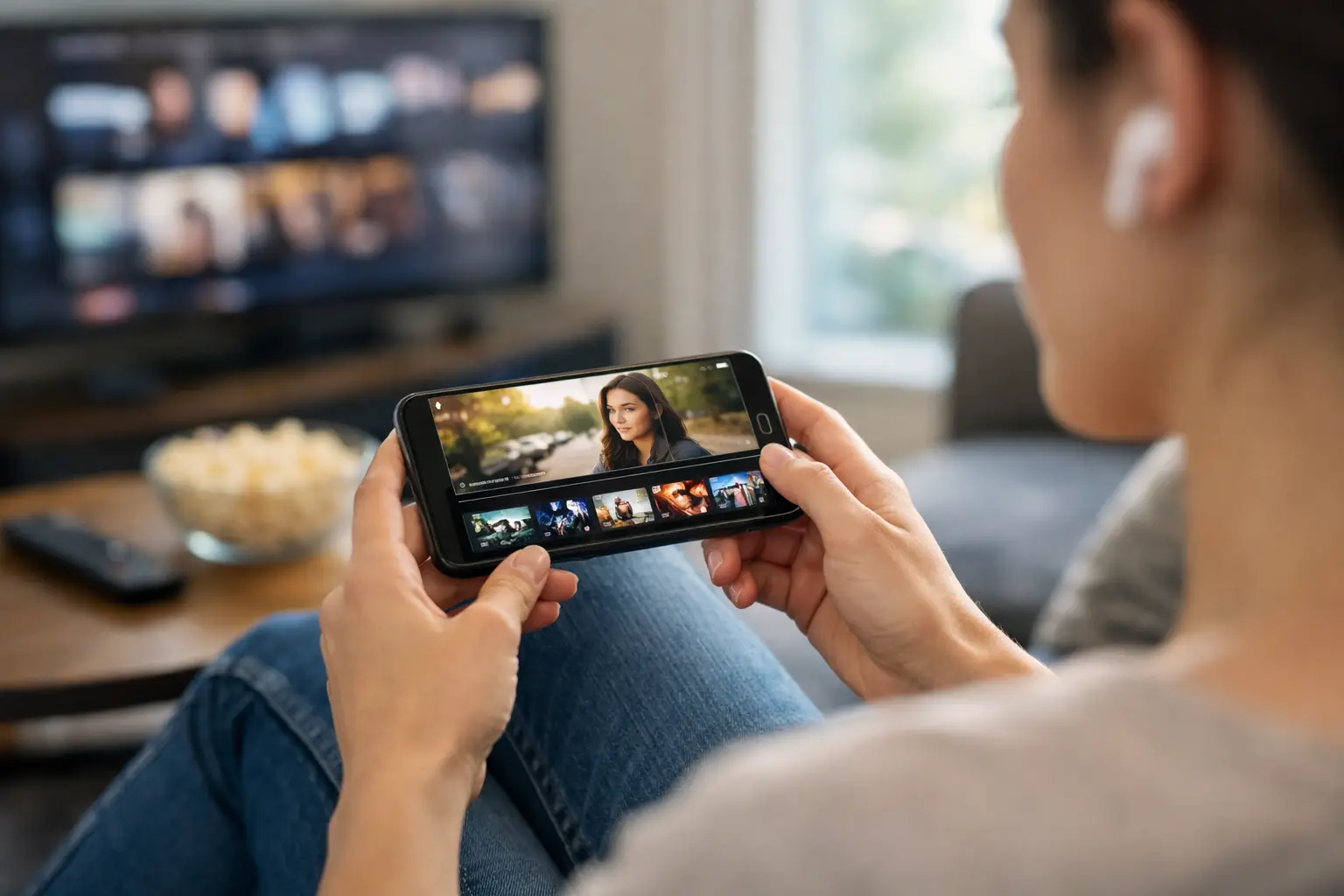
A lot of streaming still asks you to stop and negotiate. Pick a plan. Start a trial. Enter a card. Cancel later. Maybe. Free streaming cuts that whole routine and gets to the point: press play.
That shift matters because the way people watch has changed faster than the way many platforms are built. Most viewers are not sitting down every time with an hour to spare and a remote in hand. They are filling gaps in the day. Waiting in line. Riding home. Killing ten minutes before bed. For that kind of viewing, speed wins.
Why free streaming keeps getting bigger
The appeal is obvious. No subscription. No paywall. No commitment before the first episode even starts. But the real reason free streaming keeps growing is that it matches audience behavior better than a lot of premium products do.
People have become ruthless about friction. If signing up feels longer than the content itself, the moment is gone. If a platform asks for billing info before proving it has anything worth watching, that is a hard sell. Free access removes the hesitation.
That does not mean every free platform is automatically good. Some feel like giant warehouses of random leftovers. Others overload the experience with repetitive ads or clunky menus. Free is attractive, but free alone is not the whole product. The better question is whether the platform respects your time.
Free streaming is not just cheap streaming
There is a lazy way to think about ad-supported entertainment: it is the version you choose when you do not want to pay. That misses what is actually happening.
For a growing share of viewers, free streaming is not the backup plan. It is the first choice. Not because people suddenly love ads, but because they know the trade. Watch a few spots, skip the monthly bill, and keep moving. For short-form viewing especially, that exchange can feel completely reasonable.
The bigger change is that free platforms are no longer defined only by what they lack. They are starting to build around what viewers actually want: faster access, lighter commitment, and content designed for the screen already in your hand.
That last part matters more than people admit. A lot of streaming libraries were built from the old TV mindset and then squeezed onto phones. It works, sort of. But native mobile viewing is a different experience. Different pacing. Different framing. Different expectations.
The mobile shift changed the rules
Here is the blunt version: if your audience mainly watches on a phone, horizontal, long-session thinking is not enough.
Mobile viewers are not always looking for a 90-minute movie or a prestige series they need to schedule around. Sometimes they are. A lot of the time, they want something immediate and sharp. Something that starts fast and pays off fast. That is where short-form and vertical storytelling stop looking like side experiments and start looking like the main event.
Free streaming fits this behavior because it removes the extra asks. No commitment pairs well with low-commitment viewing. Open the app. Find a show. Watch now. That simple flow is not a gimmick. It is product-market fit.
This is also why vertical video keeps getting more serious. On social platforms, vertical already won attention. In streaming, it is becoming a legitimate entertainment format. Not every story belongs there. Big cinematic worlds and traditional long-form series still have their lane. But mobile-native entertainment does not need to imitate TV to be real entertainment.
What makes a free streaming platform worth using
The best free experiences are not trying to be everything. They are clear about what they are and who they are for.
First, they get you into the content quickly. That means minimal setup, no credit card wall, and no maze of pricing tiers. Second, they program with intention. Viewers can tell the difference between a platform with a point of view and one that just stacked content on shelves. Third, they understand ad tolerance. People will accept ads. They will not accept feeling trapped in them.
There is also a content quality issue that gets ignored in the free versus paid debate. Paid does not always mean better. Free does not always mean disposable. Strong concepts, smart pacing, and distinctive originals matter more than whether a monthly fee exists.
That is where newer platforms have room to win. Instead of copying the subscription giants, they can build around a specific habit and a specific format. Shorter episodes. Mobile-first design. Exclusive series that feel made for how people actually watch now.
Why exclusive originals matter in free streaming
A platform without a point of view is easy to forget.
Exclusive originals change that. They give the service an identity. They also give viewers a reason to come back beyond casual browsing. In free streaming, this is even more important because audience loyalty is fragile. If everything feels interchangeable, people bounce fast.
Original programming does not need to look like traditional studio television to feel premium. It needs to feel distinctive. Unexpected genres help. Bold visuals help. A format that knows its own lane helps even more.
That is one reason AI-generated originals are getting attention. Not because the phrase alone sells a show, but because the technology can support more experimental, stylized, and high-concept work. The trade-off is obvious too: novelty wears off if the storytelling is weak. Viewers will not stick around for a gimmick. They will stick around for something weird, fun, and actually watchable.
A platform like VertyTV leans into that difference instead of hiding it. Vertical-first. Ad-supported. Exclusive AI originals. No subscription. No credit card. That is a clean proposition. More importantly, it fits a real use case: quick-hit entertainment on a phone, on demand, without friction.
The trade-offs are real
Free streaming is not magic. You are usually paying with attention instead of money.
Ads can interrupt momentum, especially in shorter content where every break feels bigger. Catalog depth may be narrower on focused platforms than on giant subscription services. And if you want one app to cover every mood, every genre, and every major release, a specialized free service may not be enough on its own.
But that is the wrong standard for a lot of viewers. Not every platform has to replace everything else. Sometimes the better question is whether it solves a specific viewing need better than anyone else.
If you want fast entertainment with no barrier to entry, free streaming can beat paid options on pure convenience. If you want prestige dramas, live sports, and blockbuster libraries all in one place, that is a different equation. It depends on the moment and on what kind of viewer you are.
Where free streaming goes next
Expect the category to get sharper, not just bigger.
The early era of streaming was about giant libraries and endless expansion. The next phase looks more focused. More format-native. More ad-supported. More willing to build around how people actually use their phones instead of pretending every viewing session starts on a couch.
That probably means more platforms choosing a lane and owning it. Some will center fandom. Some will center creators. Some will target niche genres. Some will go all in on short-form, vertical entertainment because that is where audience behavior already points.
The winners will be the services that keep the promise simple. Instant access. Clear identity. Content worth tapping on. If they can do that without stuffing the experience with friction or ad overload, viewers will keep showing up.
Free streaming is no longer the side door to entertainment. For mobile-first audiences, it is starting to look like the front door.
The smart move is not asking whether free can compete with traditional streaming. It already does. The better question is which platforms understand that your next watch is probably happening in your hand, with a few minutes to spare, and very little patience for nonsense.